

Take 20 - Random Investing Notes
A collection of insightful investment pieces to broaden and elevate the investing mindset. Includes: 1) Buy-Hold Strategy, 2) REITs - FFO and AFFO, and 3) Stan Druckenmiller’s Investing Approach

Buy-and-Hold Strategy
Buy-and-hold is a long-term, passive investment approach where investors purchase assets—typically stocks, ETFs, or mutual funds—and hold them for years or even decades, regardless of market volatility. The idea is simple: time in the market beats timing the market.
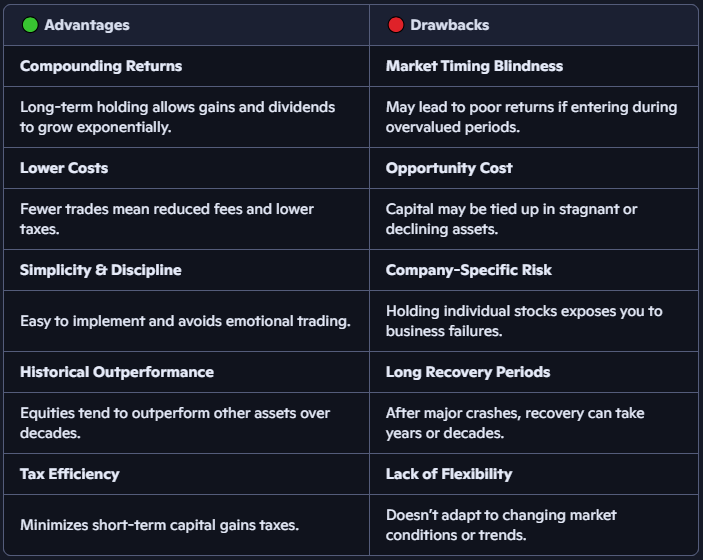
Caution is warranted—while the traditional 'buy-and-hold' strategy is often praised as a reliable path to wealth, it may pose significant risks in today’s elevated market environment.
📊 Historical Evidence
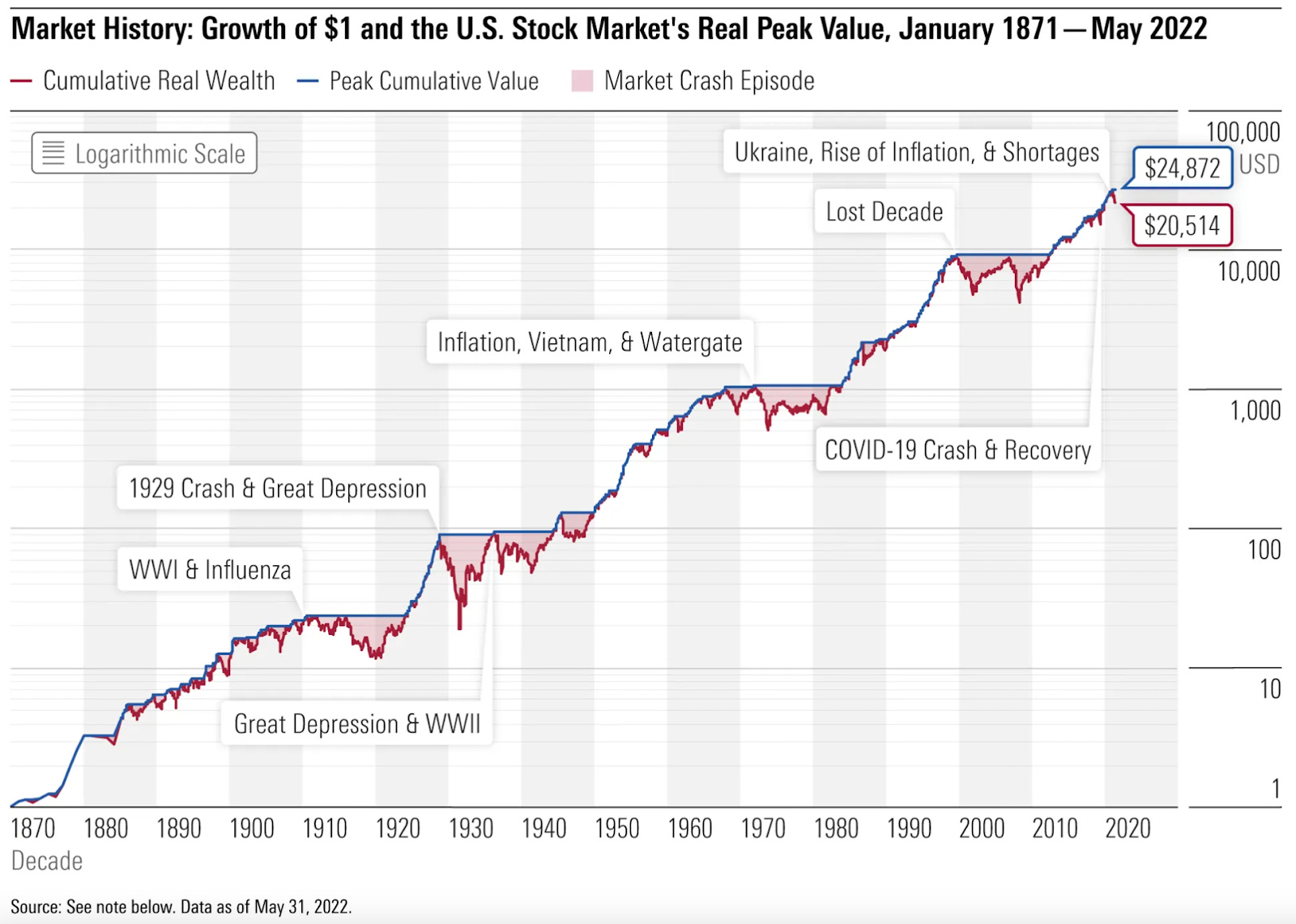
S&P 500 (1930–present): Out of nine decades, four lost money, four gained, and one was flat—essentially a coin toss.
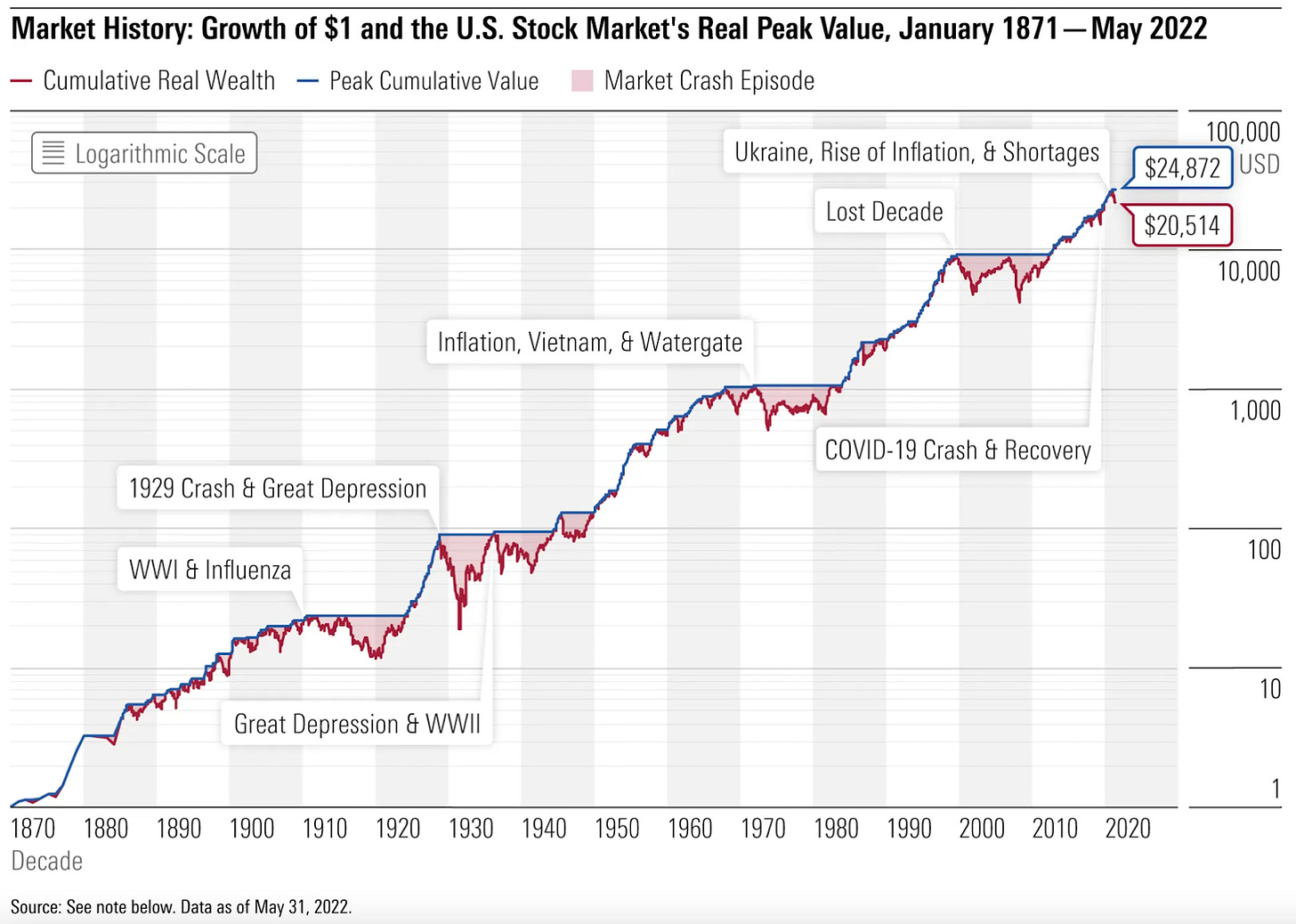
Valuation matters: No decade starting with a P/E ratio above 20 ended with inflation-adjusted gains. Today’s P/E is around 28.
🇯🇵 Japan’s Cautionary Tale
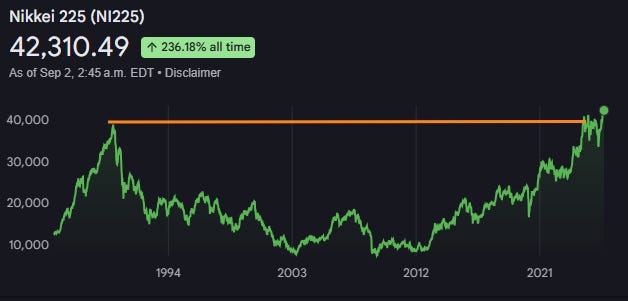
Japan’s Nikkei index soared in the 1980s, then crashed in 1990.
Buy-and-hold investors waited over 35 years just to break even nominally—and are still underwater in real terms.
The U.S. market today shows similar signs of overvaluation and concentration, especially in tech.
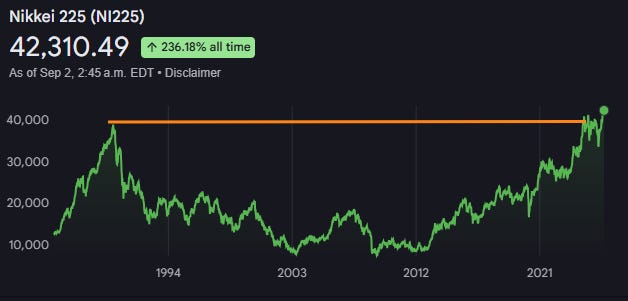
⚖️ Why Valuations & Mean Reversion Matter
High starting valuations often lead to poor long-term returns.
Market sectors eventually revert to historical averages—tech is overvalued, energy is undervalued.
Revisit my publication below to understand why valuation matters!

How to Evaluate REITs
REITs are best assessed using Funds From Operations (FFO) rather than traditional metrics like Net Income or Free Cash Flow (FCF). Here's why:
🔹 Funds From Operations (FFO)
Net Income includes depreciation—a large non-cash expense in real estate—making profits look artificially low.
FCF can be distorted by one-time property transactions, making cash flow appear inconsistent.
FFO:
Adds back depreciation and amortization to Net Income (non-cash expenses that distort profitability).
Excludes gains/losses from property sales, focusing on recurring cash flow.
Gives a clearer view of how much cash a REIT generates from its core real estate operations.
This gives a clearer picture of how much cash a REIT generates from its real estate holdings. However, FFO isn’t perfect—it doesn’t account for all recurring capital expenditures. That’s where AFFO comes in.
🔸 Adjusted Funds From Operations (AFFO)
Refines FFO by subtracting:
Capital expenditures (like maintenance and improvements)
Straight-lining of rents (an accounting adjustment that smooths rent income over time)
Offers a more accurate picture of cash available for dividends.
Often used to assess dividend sustainability and true payout ratios.
Think of AFFO as the REIT equivalent of “owner’s earnings”—what’s left after keeping the properties in good shape.
📊 Key Metrics to Watch
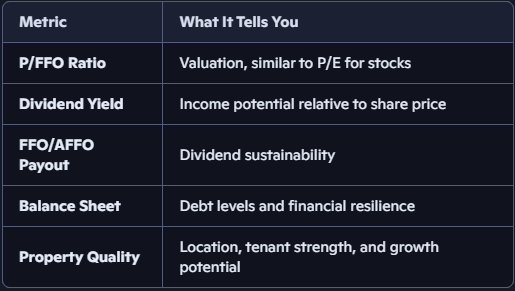
Use FFO for a broad view of operating performance.
Use AFFO for a sharper lens on dividend safety and cash flow health.
Stan Druckenmiller’s Unique Investing Approach
Stanley Druckenmiller is an American billionaire investor and former hedge fund manager best known for founding Duquesne Capital. He gained global recognition as the lead portfolio manager for George Soros’s Quantum Fund, famously helping to “break the Bank of England” in 1992 by shorting the British pound for a profit of over $1 billion.
Legendary Track Record: Over 30 years at Duquesne Capital, Druckenmiller achieved 30% annual returns with no down years.
Macro + Bottom-Up: Though known as a macro investor, he starts with company-level analysis—listening to management, studying financials, and understanding industry trends.
Multi-Asset Strategy: Invests across equities, currencies, and bonds, unlike traditional stock-focused investors like Buffett or Lynch.
🔍 Key Principles & Lessons
Keep an Open Mind: He embraced AI early by investing in Nvidia, guided by his younger partners. He also spotted the GLP-1 weight loss trend via Eli Lilly.
Buy First, Analyze Later: Druckenmiller often initiates positions in promising trends before deep analysis to avoid missing out.
Find Good Mentors: He credits George Soros for teaching him to concentrate and size positions effectively.
Love the Game: Passion for investing—not money—is what sustains long-term success.
Stay Rational: He avoids emotional bias, isn’t afraid to sell at a loss, and rebuys stocks if the story changes.
💡 Takeaways for Retail Investors
Focus on individual companies—even when chasing macro or trend-driven ideas.
Independent thinking and early trend recognition can lead to outsized returns.
While Druckenmiller’s tools and team are elite, his mindset and discipline are replicable.
FEATURED STORY

From Your Friends at Estate Brew ☕️

If you love dividends, you’re in good company—we do too. Real estate has long been a reliable source of income, from REITs and rentals to commercial investments. But global market shifts are changing the game:

→ Rising interest rates in the U.S.
→ Rental shortages in the U.K.
→ Costly developments in Australia

That’s why we created Estate Brew—your free daily or weekly digest of global real estate news. We cover residential, commercial, and legal updates across the U.S., U.K., India, Australia, and Canada to help you stay informed and sharpen your dividend strategy.

👉 Read today’s Estate Brew and see how the latest market moves could impact your income.
Past Editions

Includes: 1) Stock-Based Compensation, 2) Loyal Monopolies, and 3) Interest Rate Cuts.

Includes: 1) Norway’s Sovereign Wealth Fund, 2) Macro Against Sectors, and 3) Long-Term Focus.

Includes: 1) Revisiting CRE, 2) Investment Returns since 1985, and 3) Recessionary Impacts.

Includes: 1) Limiting Losses, 2) Stop-Loss Orders, and 3) Debt vs. Equity.

Includes: 1) Credit Ratings, 2) Pricing Power, & 3) The Renewables Dilemma.

Includes: 1) Stock Checklist, 2) Dividend Strength Data, & 3) Lessons from Warren Buffet and Mark Leonard.

Consider joining DiviStock Chronicles’ Referral Program for more neat rewards!Please refer to the details of the referral program.
Really like the mix here — buy-and-hold gets praised as gospel, but the Japan case shows valuation and starting point matter just as much as time horizon. Pair that with the REIT FFO/AFFO distinction and Druckenmiller’s willingness to size up conviction, and you’ve got three reminders that patience only works if it’s paired with price discipline and adaptability.